Multi-residential · 10 min
Modular Rental Building: Profitability and Return on Investment
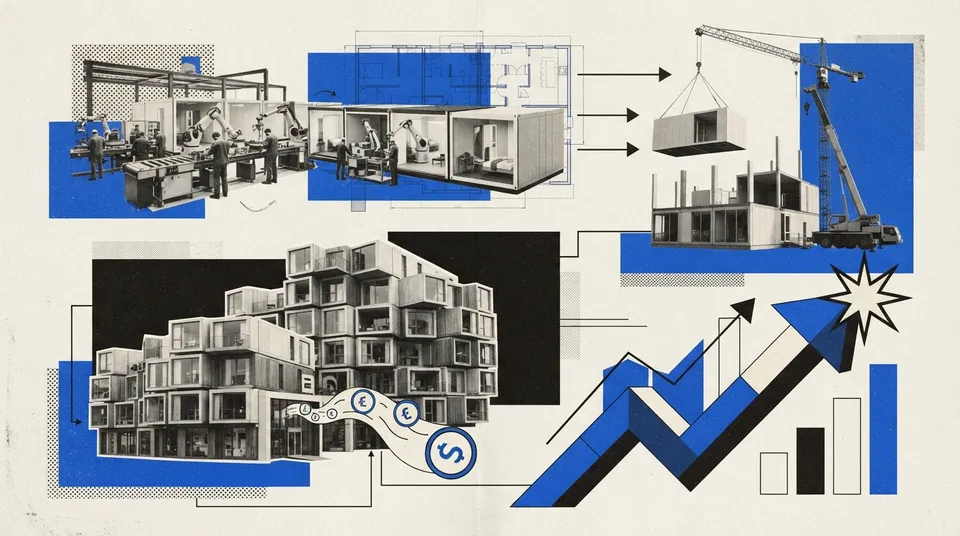
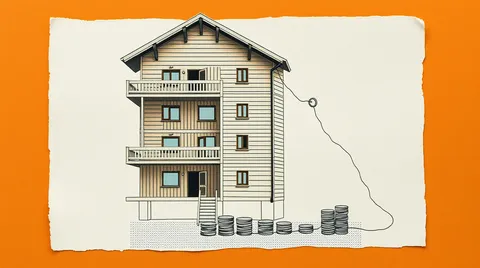
In short — For a rental building, the financial advantage of modular construction is measured primarily not in construction cost, but in schedule. A building delivered in approximately 8 months rather than 14 to 18 reduces carrying costs and brings in rental income sooner — two effects that improve the real return on a rental project. The profitability calculation remains the same (net income against total cost), but two variables improve: time to revenue and carrying cost.
An investor assesses a rental building on numbers: rental income, operating expenses, net operating income, total project cost, financing. The construction method — modular or conventional — does not appear directly in those ratios. It acts indirectly, by changing two levers: construction duration and carrying cost. This guide explains precisely where modular has an impact, and where it changes nothing.
The profitability calculation, without jargon
Three measures are sufficient for most decisions:
- Net operating income (NOI) = annual rents minus operating expenses (taxes, insurance, maintenance, management, vacancy). The construction method does not directly influence NOI — once rented, a modular unit rents like any other.
- Capitalization rate ("cap rate") = NOI ÷ total project cost. Here, modular can affect the denominator (total cost) depending on the project structure.
- Real return for the investor — the one that incorporates time. And that is where modular changes the equation the most.
Where modular genuinely improves returns
1. Carrying costs: fewer months of construction, less interest
During construction, a rental project generates no rental income but accumulates interest on the construction loan, property taxes and other fees. Every construction month has a cost. By compressing the schedule from approximately 14–18 months to approximately 8 months, modular reduces this unproductive period — and therefore the carrying cost. On a multi-million-dollar building, a few fewer months of interest represent a real sum.
2. Faster occupancy: income sooner
The positive counterpart of the same schedule: rents start coming in sooner. In a tight rental market, delivering six months faster means six months of additional income over the holding period — and a return on investment that starts earlier.
3. Greater schedule predictability
Factory fabrication is less exposed to weather and job-site labour disruptions. A more predictable schedule reduces the risk of costly overruns — a factor that lenders and investors value, even if it does not appear in a ratio.
"On a rental project, time is a cost. Modular does not only sell housing: it sells a shorter schedule, and that is often where the additional return lies."
What modular does not change
To be clear: modular is not a magic formula for returns.
- Land, foundation and connections cost the same regardless of construction method.
- Operating expenses (taxes, insurance, maintenance, vacancy) are independent of the construction method.
- Module costs are not systematically lower than equivalent conventional construction; on high-end projects, the gap can narrow.
- Zoning and permitted density cap income the same way in both cases.
The modular advantage is therefore mainly a schedule and predictability advantage, not a guaranteed reduction in cost per square foot. To understand how to read a cost per door and what it includes, see our guide to building a modular multiplex.
Financial profile comparison
The table below illustrates where the differences lie (direction of effects), not dollar amounts. Actual figures must be established project by project.
| Line item | Modular effect | Why |
|---|---|---|
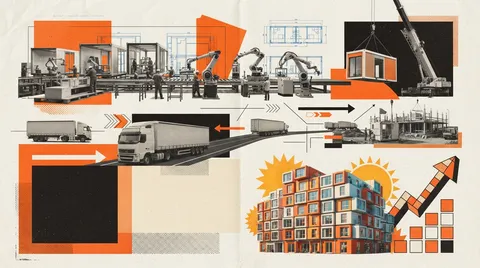
| Construction duration | Shorter (approx. 8 months vs. 14–18) | Factory + site in parallel |
| Carrying cost (interest, taxes during construction) | Reduced | Fewer unproductive months |
| Start of rental income | Earlier | Accelerated delivery |
| Module costs (construction) | Comparable to variable | Depends on specs and project |
| Land, foundation, connections | Unchanged | Independent of construction method |
| Operating expenses | Unchanged | Tied to the building, not the method |
| Schedule predictability | Improved | Factory fabrication sheltered from disruptions |
Financing and programs
Financing a modular rental building follows the same logic as a conventional project, with particular attention to the disbursement schedule: a portion of value is created at the factory, before on-site assembly. Raise this point early with your lender. On the builder side, Quebec manufacturers specializing in multi-unit housing — such as 8Module — offer a fixed price locked at signing, which simplifies cash-flow projections in the pro forma.
Disclosure — 8Module is a commercial client of Modulaire Québec; we receive compensation when we refer a lead. This content remains editorial and independent — 8Module neither commissioned nor reviewed it. Full disclosure.
On the program side, CMHC (Canada Mortgage and Housing Corporation) offers rental housing financing products, some of which target affordability and can apply to modular projects. For projects carried by a nonprofit organization or a housing office, additional levers exist — detailed in our guide on affordable and community housing in modular construction. To understand what is built in the factory and what remains on the job site, see also our guide on modular, manufactured and prefabricated homes.
In summary
- The profitability of a modular rental building is calculated like any other project: net income against total cost.
- Modular mainly improves two levers: lower carrying costs and earlier rental income, thanks to the compressed schedule.
- It does not reduce land cost, foundation cost or operating expenses.
- The advantage is real but must be quantified project by project, by comparing equivalent quotes.
Sources: CMHC — Canada Mortgage and Housing Corporation (rental housing financing), Institut de la statistique du Québec (ISQ), Régie du bâtiment du Québec. Article written by Jeremy Soares. Last updated: June 24, 2026.

8Module
Modular multi-residential buildings (6 to 24+ units) factory-built in Quebec.
Visit websiteCommercial partnership — we receive compensation. Disclosure
Frequently asked questions
Is a modular rental building more profitable than a conventional one?
Does modular reduce the total project cost?
Does CMHC finance a modular rental building?
Are rents lower in a modular building?
What is the main financial risk in a modular project?
Sources
- Rental Housing Financing Programs — CMHC — Canada Mortgage and Housing Corporation
- Rental Market and Construction Data — Institut de la statistique du Québec (ISQ)
- Quebec Construction Code — Régie du bâtiment du Québec (RBQ)


Comments
A question or comment on this article? The comments section will be enabled soon.