Fundamentals · 9 min
Container Home in Quebec: Feasibility, Cost and Reality
In short — Yes, you can build a container home in Quebec — but it is not necessarily cheaper, and the cold climate imposes serious constraints. A shipping container is steel: it conducts the cold, must be heavily insulated from the outside to avoid condensation, and requires costly structural cut-outs for windows and openings. The result can be superb and solid, but the "cheap container" is mostly a myth. Like any house, it must comply with the Construction Code (RBQ) and municipal zoning.
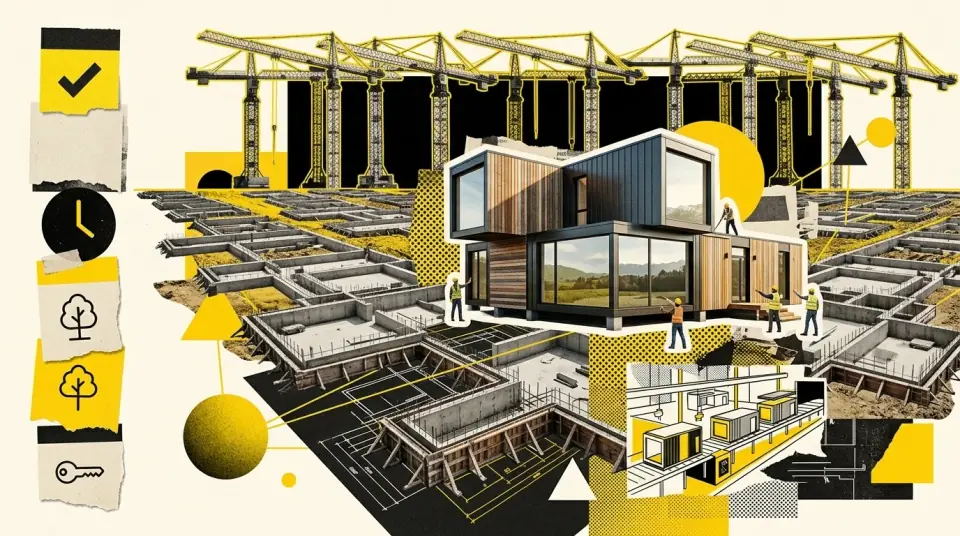
The container home fascinates: the idea of turning a steel box into a dwelling ticks every box of the imagination — recycling, modularity, industrial look. But between the Pinterest image and a compliant, comfortable project in Quebec, there is a world of difference. Let's look at it without the myths.
Where the container sits among prefab homes
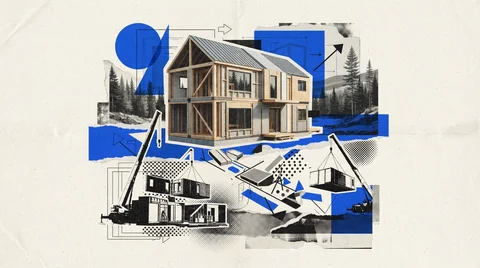
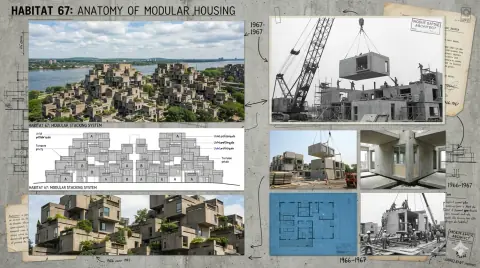
The container is a form of modular construction in the broad sense: a three-dimensional box that gets fitted out and assembled. It stands apart from classic wood modules by its material (steel) and its origin (maritime shipping). To place all the families, see our guide to the types of prefab homes and our definition of modular construction.
Challenge number one: the Quebec winter
Steel is an excellent thermal bridge: it transmits cold and encourages condensation. In Quebec, that demands careful exterior insulation (so as not to lose the already tight interior space of a container) and rigorous moisture management. It is doable — resources like Écohabitation document it — but it is a cost and design item people often underestimate. The choice of structural material matters; see our wood and steel comparison.
The "cheap" myth
Intuition says: a used container costs little, so the house will be economical. The reality is more nuanced:
- Structural cut-outs. Every window or opening cuts load-bearing steel and requires reinforcement.
- Heavy insulation. Essential in Quebec, and it adds significant cost.
- Preparing the container. Decontamination, treatment, interior finishing.
- The same off-factory costs as any house. Land, foundation, hookups, permits.
The result: at equivalent finish and comfort, the savings are not guaranteed. Estimate the total cost with our price calculator and our price guide, and be wary of comparisons that only include the box.
Compliance and zoning
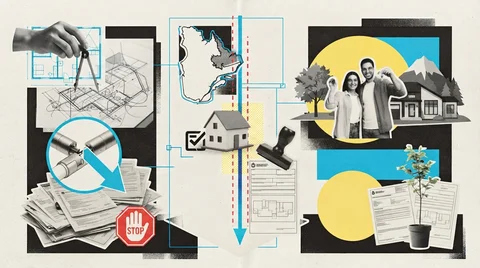
A container home is still a home: it must comply with the Quebec Construction Code (RBQ) — insulation, structure, safety — and the municipality's zoning bylaw, which may regulate appearance or prohibit this type of construction in certain zones. Check the permit and, above all, consult your city: each municipality page shows where to find the local bylaw.
So, good idea or not?
For the right project — a client who loves the aesthetic, an experienced designer, a realistic budget — the container home can deliver a remarkable, durable result. But if the only motivation is "paying less," it often disappoints. Approach it as a choice of design and solidity, not as a budget shortcut.

8Module
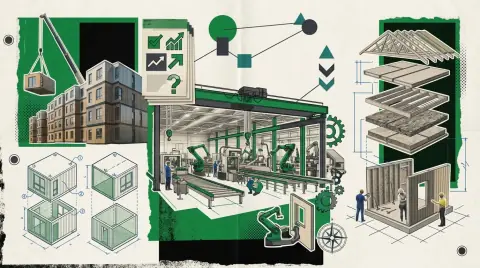
Modular multi-residential buildings (6 to 24+ units) factory-built in Quebec.
Visit websiteCommercial partnership — we receive compensation. Disclosure
Frequently asked questions
Is a container home cheaper in Quebec?
Can a container be insulated well enough for a Quebec winter?
Are container homes allowed in Quebec?
Sources
- Code de construction du Québec — Régie du bâtiment du Québec (RBQ)
- Construire avec des conteneurs : avantages et limites — Écohabitation
- Architecture en conteneurs — ArchDaily
Comments
A question or comment on this article? The comments section will be enabled soon.