Residential · 8 min
Modular vs Traditional: Who Wins Over 10 Years?
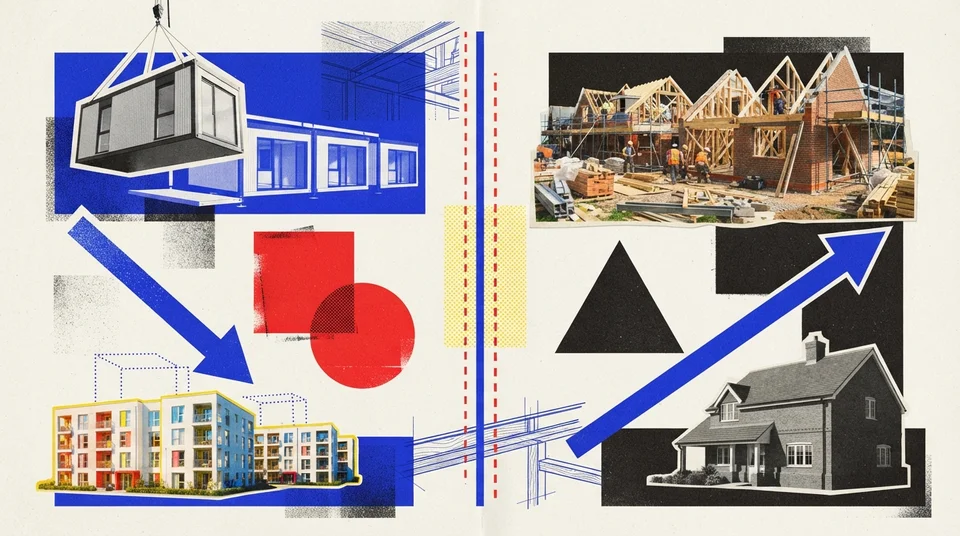
In short — Over 10 years, a modular home and a traditional home of equivalent quality behave similarly on maintenance and resale (both on permanent foundations). The gap plays out at the start: modular often costs less to build and is delivered faster — a time gain that, with interest and rent subtracted, genuinely weighs in the ten-year balance.
Comparing "modular vs traditional" on the starting price alone means looking at the wrong number. A buyer's real question is: over ten years, which one costs me less, all in?
The four dimensions that matter
| Dimension | Modular | Traditional |
|---|---|---|
| Construction cost | Often lower at equal quality | Baseline |
| Delivery time | Shorter (factory + site in parallel) | Longer |
| Maintenance (on foundation) | Comparable | Comparable |
| Resale (on foundation) | Comparable | Comparable |
The key nuance: on a permanent foundation, modular and traditional age and resell in comparable ways — as documented in lifespan and resale value. The prejudice that "modular resells poorly" does not hold for a home anchored to the ground and built to the Code.
Where modular takes the lead: time
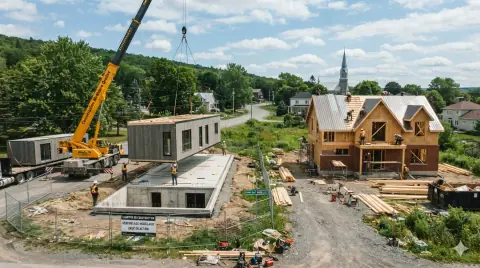
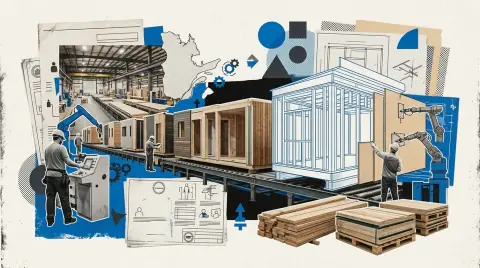
This is the angle people forget. Modular often moves move-in day forward by several months (factory fabrication runs while site work proceeds). Concretely, over the years:
- fewer months of rent or temporary housing during construction;
- fewer months of interest on construction financing;
- a shorter exposure to job-site hazards (weather, labour).
This schedule gain is a real, quantifiable advantage — often underestimated in per-square-foot price comparisons. For the technical, item-by-item comparison, see modular vs traditional construction.
Where caution is warranted
Modular is not magic. The land, foundation and hookups do not benefit from the factory gain, and customization is more constrained than a bespoke site build. The balance depends on the project — see advantages and drawbacks.
The 10-year verdict
At equivalent quality and on a permanent foundation: comparable maintenance and resale, advantage modular at the start (often lower construction cost + time gain). Traditional regains the edge mainly when bespoke customization is an absolute priority. To put numbers on your own case, start from the real cost of a modular home and the pricing page.
Sources: Régie du bâtiment du Québec (Construction Code). Guide written by Jeremy Soares. Last updated: June 26, 2026. Assumptions and amounts are indicative and must be validated case by case.

8Module
Modular multi-residential buildings (6 to 24+ units) factory-built in Quebec.
Visit websiteCommercial partnership — we receive compensation. Disclosure
Frequently asked questions
Does a modular home resell worse than a traditional one?
Does modular really cost less over 10 years?
When is traditional preferable?
Does the time gain have real financial value?
Sources
- Code de construction du Québec — Régie du bâtiment du Québec (RBQ)



Comments
A question or comment on this article? The comments section will be enabled soon.