Fundamentals · 9 min
What Is Modular Construction?
In short — Modular construction is a process where a building is manufactured in complete sections — the modules — inside a factory, then transported and assembled on a permanent foundation. Once in place, it is a full-fledged building, subject to the same Quebec Construction Code as anything built on-site. The main advantage: timelines that are often cut in half.
The word "modular" comes up constantly when shopping for a new home, a rental building, or a commercial structure. But what does it actually mean? And how is it different from an "ordinary" house? This article lays the groundwork — no jargon — so you understand the process before comparing prices or choosing a builder.
The definition, simply put
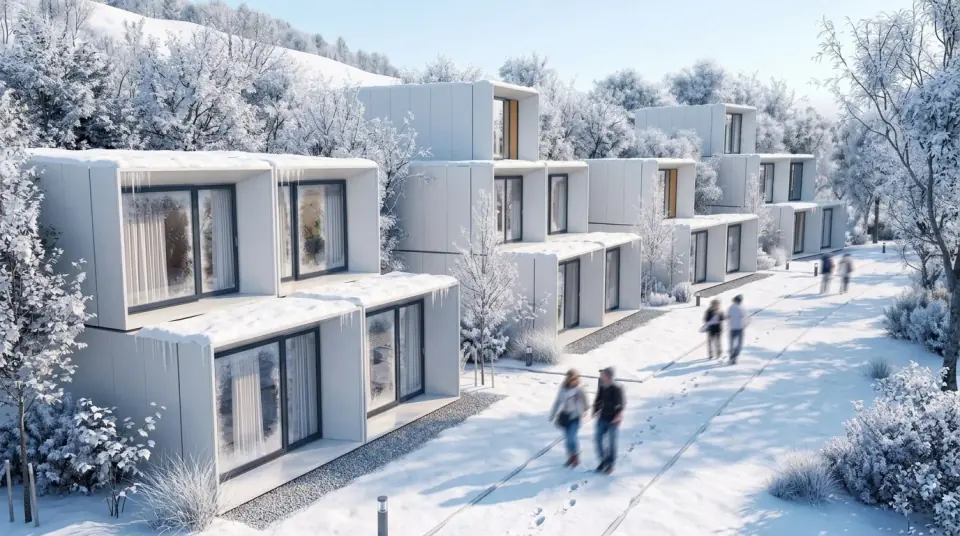
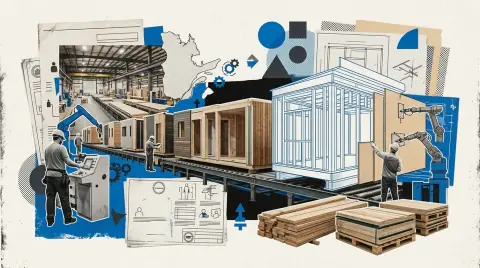
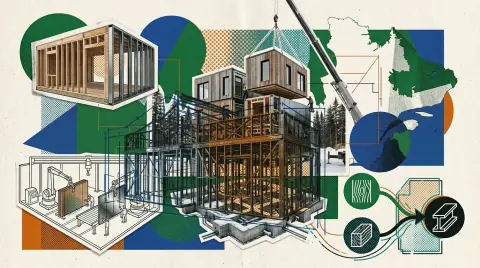
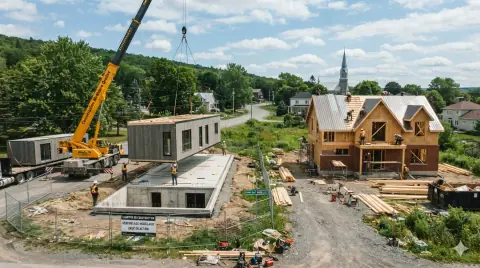
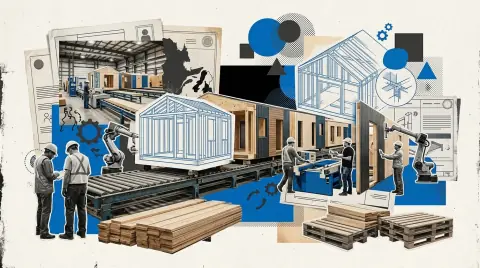
Modular construction means building a structure as three-dimensional modules — complete boxes containing floors, walls, ceiling, plumbing, electrical systems, and often the interior finishes — inside a factory. These modules are then delivered by truck to the site, lifted by crane, and assembled on an already-prepared foundation.
The job site is no longer used to build the structure from scratch, but to assemble already-manufactured sections. It is this shift of work — from the site to the factory — that defines modular construction and explains both its advantages and its limitations.
One key point to keep in mind from the outset: on a permanent foundation, modular construction is conventional construction in the eyes of the law. It is neither a mobile home, nor a trailer, nor a "temporary" building. We return to this below.
How it works, step by step
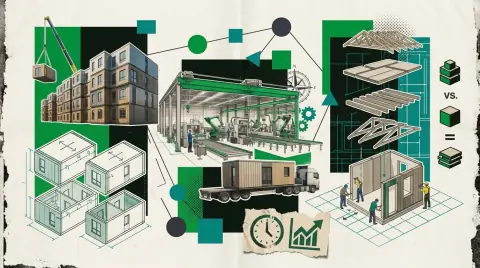
The process follows a parallel-production logic, and that is where the time savings come from.
- Design and plans. Plans, finish selections, and municipal permits are finalized.
- Factory manufacturing. While the site is being prepared, the modules are built under cover, on a controlled production line, with inspections at every stage.
- Site preparation. In parallel, the foundation is poured and utility connections (water, sewer, electrical) are installed.
- Transport. Completed modules are delivered by flatbed trailer to the site.
- Assembly. A crane sets the modules on the foundation; the structural assembly can take just a few days.
- Finishing and connections. Modules are joined together, finishes at the seams are completed, and utility services are connected.
Because steps 2 and 3 happen simultaneously, the long sequential runs of traditional construction are avoided — saving months.
"In modular construction, the job site is no longer a construction: it is an assembly."
Modular, manufactured, prefab: not the same thing
These three terms circulate as though they were synonyms; they are not quite. Prefab is the umbrella term: any home where some portion is manufactured in a factory. Modular refers specifically to manufacturing in complete modules. Manufactured home ("maison usinée") is the common Quebec term for factory-built structures, whether delivered as modules or as flat-shipped panels. The distinction affects the degree of completion at delivery and sometimes financing; it is covered in detail in our guide Modular, manufactured, prefab: the differences.
What it changes: price, timelines, quality
Here are the most commonly observed differences relative to traditional construction. These are indicative ranges: a high-end project can match or even exceed conventional costs.
| Criterion | Modular construction | Traditional construction |
|---|---|---|
| Timeline (signature to delivery) | 4 to 6 months | 8 to 14 months |
| Weather sensitivity | Low (built under cover) | High |
| Quality control | In-factory, inspected at each stage | On-site, variable |
| Material waste | Reduced (optimized production line) | Higher |
| Customization | Moderate to high | High |
Where cost savings exist, they come mainly from two sources: speed (less time, less on-site labour) and waste reduction in the factory. For detailed pricing by type and region, see our modular home price guide for Quebec. For a complete comparison of the two approaches — timelines, costs, quality, financing — see modular home vs. traditional construction.
Where is modular construction used?
Modular construction is not limited to single-family homes. It is found across several sectors:
- Residential — single-family homes, cottages, tiny homes, and ADUs.
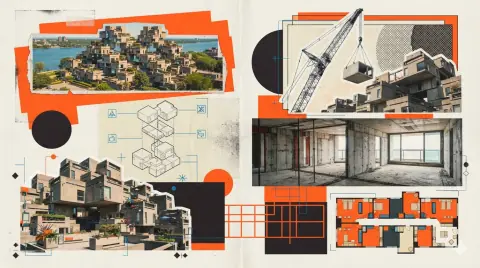
- Multi-unit residential — multiplexes (4, 6, 12, 24 units) and rental buildings, where assembly speed makes a real difference.
- Commercial — offices, clinics, site offices, hospitality.
- Institutional and community — schools, daycares, affordable housing, non-profit projects.
It is in multi-unit housing that the speed advantage is most pronounced: once the modules are delivered, an entire building can be assembled in a matter of days.
A real building, governed by law
A persistent misconception equates modular construction with mobile homes. That is incorrect. On a permanent foundation, a modular structure is built to the Quebec Construction Code — the same regulation that applies to on-site construction. It requires a municipal permit, can be inspected at every stage in the factory, and the builder must hold a valid licence from the Régie du bâtiment du Québec (RBQ, Quebec's building authority).
This regulatory framework has concrete implications for financing, warranties, and resale value. It is explained in plain language in our guide on modular construction and the Quebec Construction Code (RBQ). For official sources — RBQ, the Garantie de construction résidentielle (GCR, Quebec's new-home warranty plan), standards and programs — see our resources and references page.
In summary
- Modular construction = a building manufactured as complete modules in a factory, then assembled on a foundation.
- The main benefit is timeline (often 4 to 6 months), sometimes followed by cost.
- Work happens in parallel (factory + site), which is the source of the speed.
- On a permanent foundation, it is a real building: Quebec Code, permit, RBQ licence.
- Used in residential, multi-unit, commercial, and community applications.
Sources: Régie du bâtiment du Québec (Quebec Construction Code), APCHQ, CMHC — Canada Mortgage and Housing Corporation. Article written by Jeremy Soares. Last updated: June 24, 2026.

8Module
Modular multi-residential buildings (6 to 24+ units) factory-built in Quebec.
Visit websiteCommercial partnership — we receive compensation. Disclosure
Frequently asked questions
What is the difference between modular construction and prefab construction?
Is a modular building structurally sound?
Is modular the same as a mobile home?
How long does modular construction take?
Sources
- Quebec Construction Code — Régie du bâtiment du Québec (RBQ)
- Residential Construction Data — APCHQ
- Housing Market — CMHC — Canada Mortgage and Housing Corporation
Comments
A question or comment on this article? The comments section will be enabled soon.