Residential · 8 min
Where to Start: The 7-Step Plan for Your Modular Home
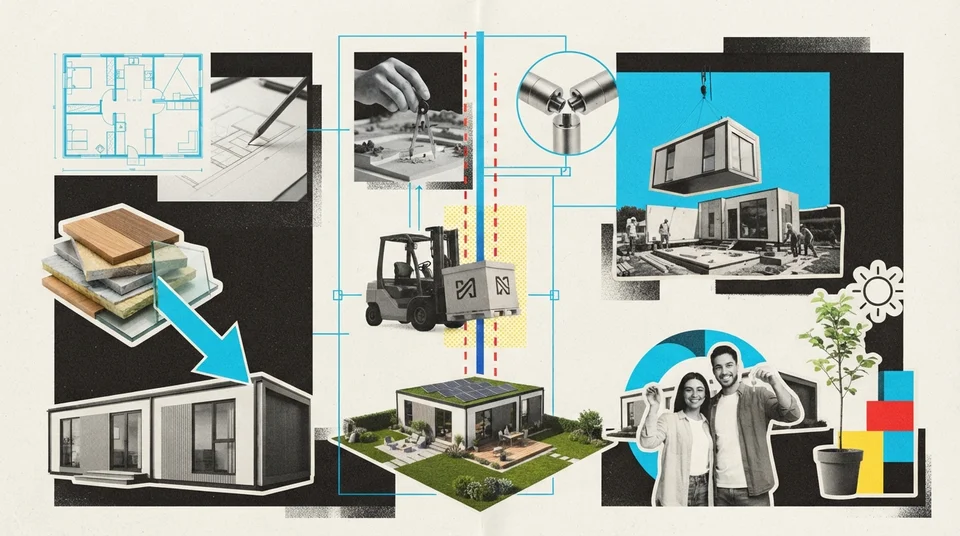
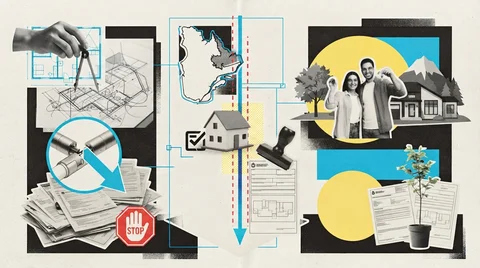
In short — A modular home project in Quebec follows seven steps: (1) clarify your budget, (2) find and validate a lot, (3) arrange financing, (4) choose a model and a builder, (5) obtain permits, (6) prepare the foundation while the home is built in the factory, (7) take delivery, assemble, and move in. The secret is not doing everything quickly — it is doing things in the right order.
Most people run into the same question: "I'd like a modular home… but where do I start?" The good news is that the path is more clearly marked than traditional construction. Here is the map.
The 7 steps, in order
| Step | What you do | What to avoid |
|---|---|---|
| 1. Overall budget | Set a realistic envelope (home + land + extras) | Looking at the factory price alone |
| 2. Land | Find, validate (soil, access, services, zoning) | Buying before verifying |
| 3. Financing | Prepare the loan (often a construction loan) | Improvising the disbursement schedule |
| 4. Model + builder | Choose a manufacturer and a model | Signing without comparing |
| 5. Permits | Municipal permit, approved connections | Underestimating timelines |
| 6. Foundation + factory | The foundation is poured while manufacturing proceeds | Assuming everything is sequential |
| 7. Delivery | Delivery, assembly, finishes, move-in | Skipping the final inspection |
1. The budget: before everything else
Everything starts here. The total cost of a project is not the factory price of the home: you must add land, foundation, utility connections, transport, and fees. Set a realistic envelope before falling in love with a model. For the mechanics of pricing, see modular home prices in Quebec.
2. The land: the decision that conditions everything
The lot determines what you can build (zoning), at what cost (soil, slope, access for the convoy and crane), and with what services (municipal water supply or well/septic). It is also the subject of a common false debate — land first or home first? We answer that question in our dedicated guide on land or home, which to buy first.
3. Financing: get ready before ordering
A modular home placed on a foundation is financed like any other property. The nuance is the disbursement schedule: part of the cost is due to the manufacturer before installation, which resembles a construction loan. Coordinate the bank and the manufacturer early — see our guide on financing and mortgage.
4. The model and the builder
Choosing the manufacturer is the most structuring decision. Verify the RBQ licence, the factory certification, the warranties, and the exact scope of the contract. The details are in our guide on how to choose your builder.
5. Permits
Every project requires a municipal permit and must comply with the Quebec Construction Code. Authorization timelines vary from one municipality to the next — start early. See our guide on modular construction and the RBQ.
6 and 7. Where time is saved
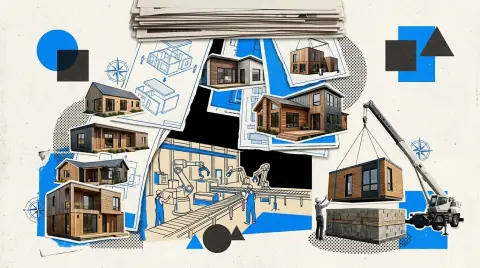
While the foundation is being prepared on your lot, your home is already being built at the factory, in parallel. When it arrives, assembly and finishes are fast. A final inspection, and you move in. It is this overlap that makes modular faster.
For a thorough overview, the starting point remains the complete modular home guide.
Sources: Régie du bâtiment du Québec (Construction Code), CMHC — Canada Mortgage and Housing Corporation (financing). Guide written by Jeremy Soares. Last updated: June 26, 2026.

8Module
Modular multi-residential buildings (6 to 24+ units) factory-built in Quebec.
Visit websiteCommercial partnership — we receive compensation. Disclosure
Frequently asked questions
Where does a modular home project begin?
How long does the whole project take?
Should you buy the land before ordering the home?
Do you need a permit for a modular home?
Sources
- Quebec Construction Code — Régie du bâtiment du Québec (RBQ)
- Mortgage Financing — CMHC — Canada Mortgage and Housing Corporation


Comments
A question or comment on this article? The comments section will be enabled soon.