Fundamentals · 6 min
5 Numbers That Sum Up the Housing Crisis in 2026
In short — If you only have thirty seconds: 1.3% vacancy in Montreal's affordable units, an average two-bedroom rent of $1,346 after a 7.2% jump in one year, roughly 860,000 homes missing by 2030 according to CMHC, a construction pace that would need to roughly quadruple — and 566 factory-built units that Quebec is testing as the start of an answer. That is the 2026 crisis in five numbers. The rest of the article explains why each one is more twisted than it looks.
Housing numbers are like hockey stats: everyone quotes them, few people check where they come from. Here are five — verified, sourced, dated — that hold the complete 2026 picture. Cut them out, stick them on the fridge, pull them out as needed.
1. — 1.3%: the shortage hiding inside the average
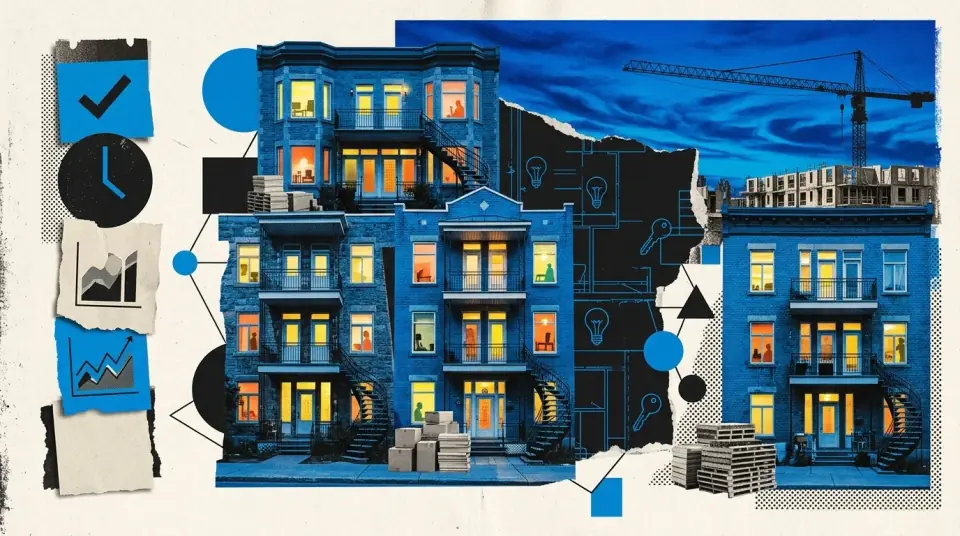
The average vacancy rate in Quebec's urban centres climbed back to 2.9% in October 2025, from 1.8% the year before. Good news? Look at the most affordable rent quartile in Montreal: 1.3% vacancy. The most expensive quartile: 4.9%. The easing is real — for those who can pay for new construction. For everyone else, the musical chairs continue, and the Quebec City CMA is playing the same tune: 2.4% on average, around 1% in the affordable segment. The average rises; the bottom of the market is still suffocating. This is THE number to throw at anyone declaring the crisis over — with our family-dinner explanation of the crisis as backup if needed.
2. — $1,346: the rent outrunning the paycheque
The average rent for a two-bedroom in the Montreal region hit $1,346 per month in October 2025 — a 7.2% increase in one year, after 6.3% the year before. CMHC adds the finding that stings: in Greater Montréal, rent growth outpaced income growth. Translation: even with a raise, the average tenant is falling behind. The metropolitan detail is in our Montreal overview, and its counterpart for the capital — where CMHC forecasts a market under pressure until 2027 — in our Capitale-Nationale overview.
3. — 860,000: the hole
In 2023, CMHC estimated that Quebec would need roughly 860,000 more housing units by 2030 to restore affordability. A point of honesty: the figure is three years old, and the federal methodology has since been revised. But no serious estimate comes in below the hundreds of thousands — and Quebec, for its part, is targeting 560,000 new homes by 2034. Whatever the decimal: the order is colossal.
4. — Quadruple: the impossible order (with current methods)
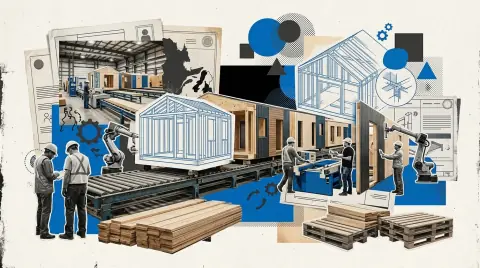
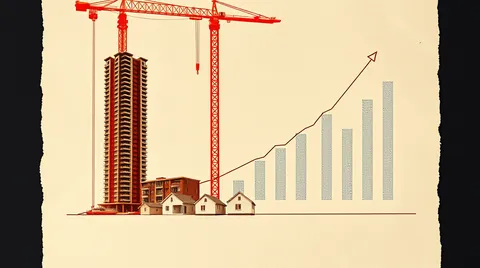
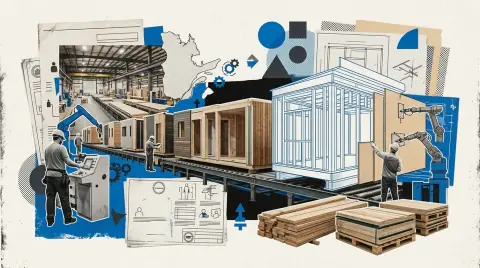
Quebec recorded about 48,700 housing starts in 2024 — a record year, up 26%. And yet, according to APCHQ, that pace would need to roughly quadruple to close the deficit by 2030. Quadruple, with a workforce already impossible to find and job sites frozen four months a year. That is the number that turns factory construction from a curiosity into a necessity: you cannot quadruple workers, but you can quadruple production lines. The full argument is in our report on the housing crisis and modular construction.
5. — 566: the factory-built start of an answer
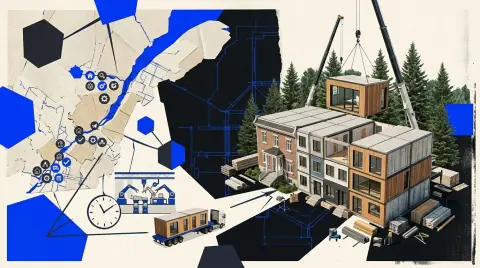
Last number, the smallest and the most promising: 566. That is the number of highly prefabricated housing units selected by the SHQ in two project calls — standardized buildings of 24 or 36 units destined mostly for small municipalities, with deliveries starting in summer 2026. The first, the Projet Acadie in Montreal, was put up in under 12 months permits included. Against number 3, it is a drop in the bucket; against number 4, it is a prototype of a solution. The town-by-town list is here.
Five numbers, one story: the market is easing at the top, suffocating at the bottom, and the only credible way out runs through building much faster. The terms that snag — quartile, CMA, vacancy — are all translated in our glossary. Have a sixth number to suggest for your region? Write to us — we like homework.

8Module
Modular multi-residential buildings (6 to 24+ units) factory-built in Quebec.
Visit websiteCommercial partnership — we receive compensation. Disclosure
Frequently asked questions
Is the housing crisis improving in 2026?
Where does the 860,000 missing homes figure come from?
Why do people say housing starts need to quadruple?
Sources
- Rental Market Report 2025 — CMHC — Canada Mortgage and Housing Corporation
- Logement inabordable à Montréal : rapport SCHL — Radio-Canada
- Les loyers montréalais ont bondi (rapport 2025) — Le Devoir
- Housing Shortages in Canada — Updated Housing Need Estimates to 2030 — CMHC — Canada Mortgage and Housing Corporation
- Quadrupler les mises en chantier pour combler le déficit d'ici 2030 — APCHQ
- Mises en chantier 2024 : une année pleine de rebondissements — APCHQ / Québec habitation
- Projet Acadie : les 26 logements modulaires sont déjà installés — Gouvernement du Québec

Comments
A question or comment on this article? The comments section will be enabled soon.