Fundamentals · 7 min
A Modular Home Factory in the Arctic: What Arviat Proves to the Rest of the Country
In short — In Arviat, Nunavut, the Inuit-owned Sakku Innovative Building Solutions is completing a prefab home factory that was set to open in spring 2026: 40 homes a year at capacity, 40 full-time jobs, houses designed for the Kivalliq and assembled locally. The project cost 70 million dollars instead of the planned 50 — and it remains probably the country's best argument for prefab in the regions: if the factory works in the Arctic, it works anywhere.
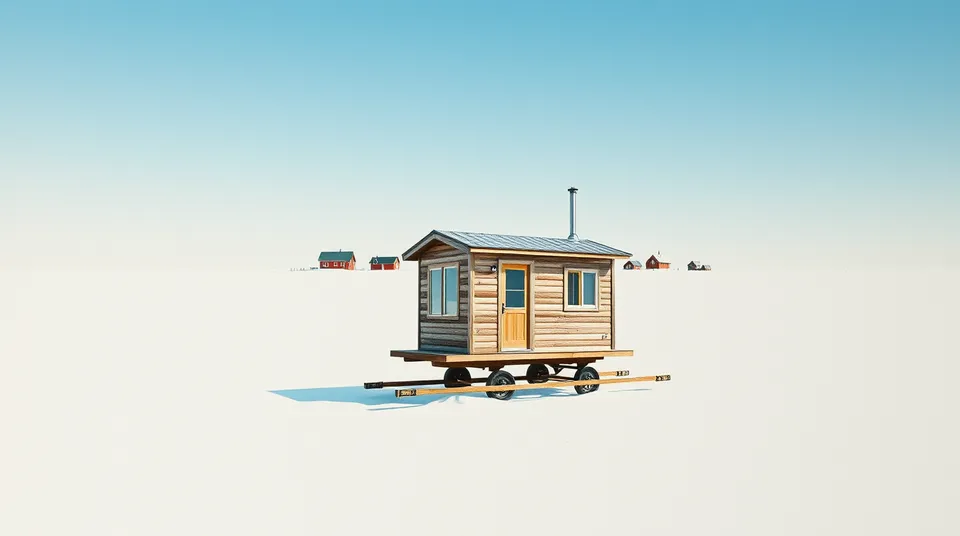
There is no territory more hostile to a construction site than Nunavut: no road south, a short barge season, unpredictable permafrost, transport costs that double the price of everything. That is precisely where the Kivalliq Inuit Association, through its business development arm Sakku Innovative Building Solutions, chose to build a prefab home factory, Radio-Canada reported in fall 2025.
What the Arviat factory changes
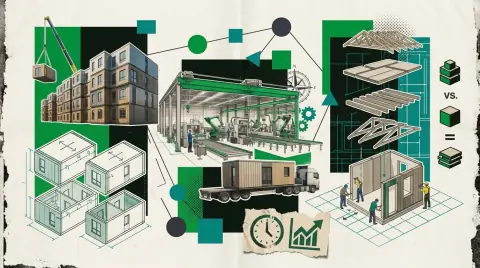
The bet is simple to state: instead of importing every 2x4, every window and every crew from the south at gold-plated prices, you import a factory once — and produce locally. Located near the Arviat airport, the plant is meant to reach a capacity of about 40 homes a year, distributed across Kivalliq communities, with 40 full-time jobs attached.
The workforce plan is designed as a transfer: specialists hired at the start to train local workers as a priority, until the expertise is local too. Arviat's mayor, Joe Savikataaq Jr., made no secret of his enthusiasm to Radio-Canada — in a community where the housing crisis means several families to a house, a plant that produces homes and jobs at once checks every box.
The houses themselves are designed for Nunavummiut: adapted to the climate, the way of life and the North's maintenance constraints — not southern models shipped as-is.
The price of ambition
The project was not spared by reality: from a planned 50 million dollars, the bill grew to about 70 million, inflated by post-pandemic costs and the need for extra storage space — in the Arctic, you warehouse materials for months, not days. That is a lesson in itself: industrial infrastructure costs dearly once, then produces for decades. The same math applies, at a more modest scale, to any Quebec region wondering whether structuring a local supply chain is "worth it."
If it works in the Arctic, the regional argument is settled
Bring this back to Quebec. The classic objections to prefab in the regions — "too far," "no workforce," "climate too harsh" — all exist in Nunavut, times ten. And the answer chosen was a local factory, not surrender. The Côte-Nord and Nord-du-Québec share a portion of those constraints — distances, short seasons, worker shortages — and the same potential.
We saw it with the SDE's 478-unit contract in eastern Quebec: when the order is pooled and guaranteed, the factory follows. Arviat pushes the demonstration one step further — the factory can even come to where nobody thought construction possible. To sort what prefab does well and less well, our summary of the pros and cons is the right starting point; for the prejudices that still linger, see our myths of modular construction.
Is your municipality or organization juggling the same distance and workforce constraints? We can prepare a quote request together.

8Module
Modular multi-residential buildings (6 to 24+ units) factory-built in Quebec.
Visit websiteCommercial partnership — we receive compensation. Disclosure

Comments
A question or comment on this article? The comments section will be enabled soon.