Non-profit · 7 min
Housing and Modular Construction in the Nord-du-Québec: The 2026 Picture
In short — Nowhere in Quebec is building as hard as in the Nord-du-Québec: in Chibougamau, rebuilding 50 public housing units will cost $33.7 million — $10 million more than planned — and Nunavik is short about 800 social housing units in villages where building costs at least three times more than in the south. It is the extreme case where factory construction makes the most sense on paper — provided we stay honest about its limits: transport, crane, short season.
The Nord-du-Québec is two worlds: Jamésie, around Chibougamau, connected by road, and Nunavik, reachable by air and sea. Public data is scarcer here than elsewhere — this article sticks to what is documented, and places the rest in the provincial context. Here is the 2026 picture.
Jamésie: Chibougamau rebuilds
Le Devoir devoted a feature to the shortage in Chibougamau: the lack of housing there touches every income class and feeds air commuting — workers earn their living in the region without being able to settle there (Le Devoir).
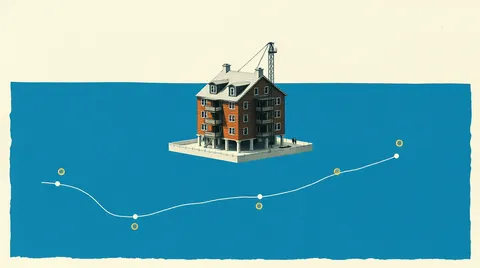
The local response is advancing on two fronts. On one side, the City announced "more than 300 new units in Jamésie" (Ville de Chibougamau), and Les Pavillons du 49e delivered two buildings of about 20 units each — the first occupied in February 2024, the second delivered in late 2024. On the other, the Projet Renaissance — the demolition and reconstruction of 50 public housing units in Chibougamau — illustrates the price of the North: its cost rose from about $23.7 million to $33.7 million (La Sentinelle). A $10-million overrun on 50 units is precisely the kind of risk prefabrication seeks to compress: the shorter the local site phase, the less remoteness weighs on the bill.
Nunavik: the crisis within the crisis
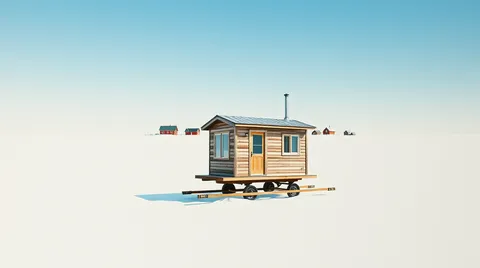
North of the 55th parallel, the numbers change scale. Nunavik is short about 800 social housing units, and overcrowding is chronic — households of 10 to 12 people per unit are reported (Radio-Canada). Building there costs at least three times more than in southern Quebec, and logistical capacity tops out at around a hundred units per year.
Now the climate is piling on: in Kuujjuaq, permafrost thaw is cracking existing houses, as Le Nouvelliste documented in May 2026 (Le Nouvelliste). The North does not just lack new homes: part of the existing stock is under threat. Nunavik's housing office is in fact working on a renovation plan for the existing stock (Radio-Canada) — in the North, preserving a home always costs less than replacing it.
What modular can — and cannot — do there
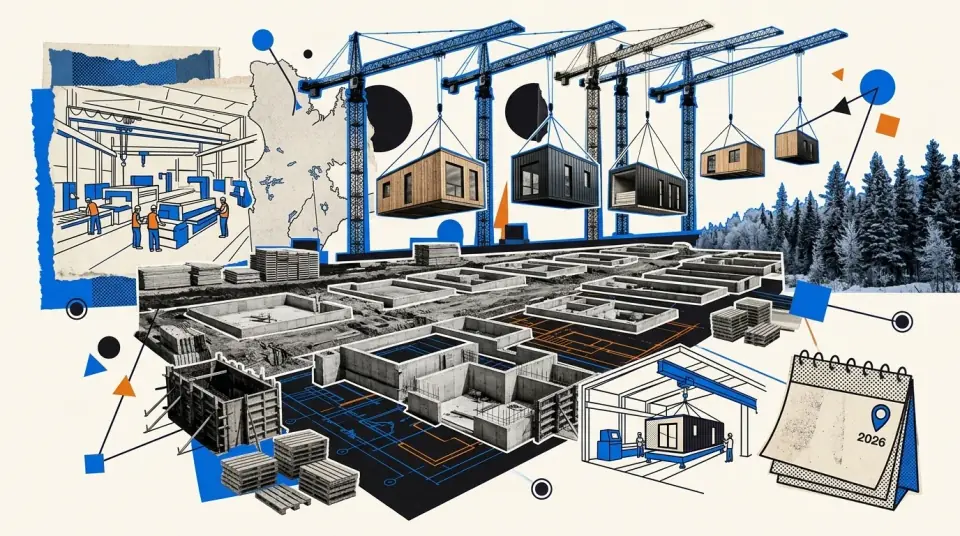
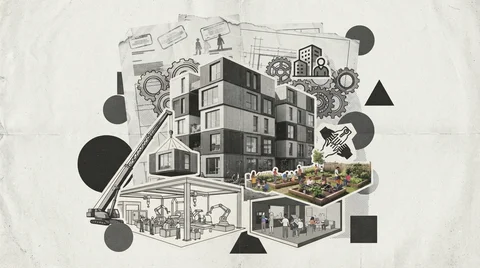
The theoretical argument is at its strongest here. When every week of local site work costs in mobilization, worker lodging and weather windows, moving 80% of the work into a southern factory changes the equation: consistent quality sheltered from the elements, a local site phase reduced to assembly, a calendar less exposed to winter. That is the logic we detail in our feature on the housing crisis and modular construction.
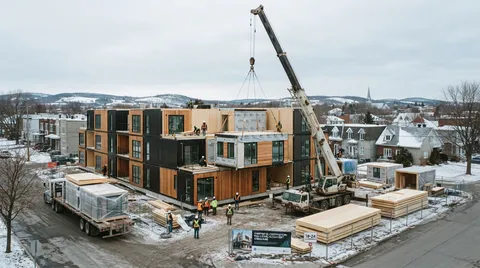
But honesty requires naming the limits. Trucking modules to Chibougamau by road is feasible; getting them to Nunavik means a ship and a short summer window. You need a crane and adapted foundations — on permafrost, an engineering challenge in itself. And no winner of the SHQ's first call for highly prefabricated housing (11 projects, 336 units, announced August 22, 2025) is located in the Nord-du-Québec (official list). The standardized 24- or 36-unit format — designed for small towns — would nonetheless suit Jamésie well, and a more modest modular multiplex would suit many villages. Our guide for municipalities explains how to build an application file.
The most telling pan-Canadian precedent comes from a CMHC pilot: in Calgary, 605 Studio West delivered 84 affordable units built and occupied in under a year, versus nearly two years for a comparable conventional project in the same neighbourhood (CMHC). It is that 800-plus-unit pilot that convinced CMHC to insure modular multi-unit housing across all its products since May 2026.
The programs available in 2026
- PHAQ (Programme d'habitation abordable Québec). The 2026-2027 budget funds a new call for 1,000 affordable units — the first regular call since 2023 (Québec.ca).
- The SHQ "highly prefabricated" calls. 566 units selected across two calls, funded by the $1.8-billion Canada-Quebec agreement (FACL) targeting 8,000 social and affordable units; none in the Nord-du-Québec to date — a Jamésie application would have solid arguments.
- Maisons Canada. The federal agency with $13 billion explicitly prioritizes prefabricated, modular and mass-timber construction — an orientation tailored for territories where conventional builds cost the most.
- Nunavik-specific envelopes, where social housing falls under separate agreements between Quebec, Ottawa and Inuit organizations — a framework apart from the rest of the province.
- CMHC mortgage loan insurance extended to modular (May 2026), which eases the financing of prefabricated multi-unit buildings — we break it all down in our guide to funding affordable modular housing.
Sources: Ville de Chibougamau, Le Devoir, La Sentinelle, Le Nouvelliste, Radio-Canada, Gouvernement du Québec (SHQ). Article written by Jeremy Soares. Last updated: July 2, 2026.

8Module
Modular multi-residential buildings (6 to 24+ units) factory-built in Quebec.
Visit websiteCommercial partnership — we receive compensation. Disclosure
Frequently asked questions
What is happening with housing in Chibougamau?
Why does building cost so much in Nunavik?
Is modular suited to the Nord-du-Québec?
Sources
- Annonce majeure : plus de 300 nouveaux logements en Jamésie — Ville de Chibougamau
- De l'immobilier collectif pour en finir avec la pénurie de logements à Chibougamau — Le Devoir
- Les HLM de Chibougamau et de Chapais font bonne figure — La Sentinelle
- Les coops à Kuujjuaq : une crise du logement sur fond de changements climatiques — Le Nouvelliste
- Construction de logements et d'infrastructures au Nunavik — Radio-Canada
- Un plan de rénovation pour les logements du Nunavik — Radio-Canada
- CMHC expands mortgage insurance support for prefab and modular construction — SCHL/CMHC
- Construire autrement et plus rapidement : la voie du hautement préfabriqué est maintenant tracée — Gouvernement du Québec
- Budget 2026-2027 — plus de 3,6 G$ pour appuyer les Québécois — Gouvernement du Québec

Comments
A question or comment on this article? The comments section will be enabled soon.